
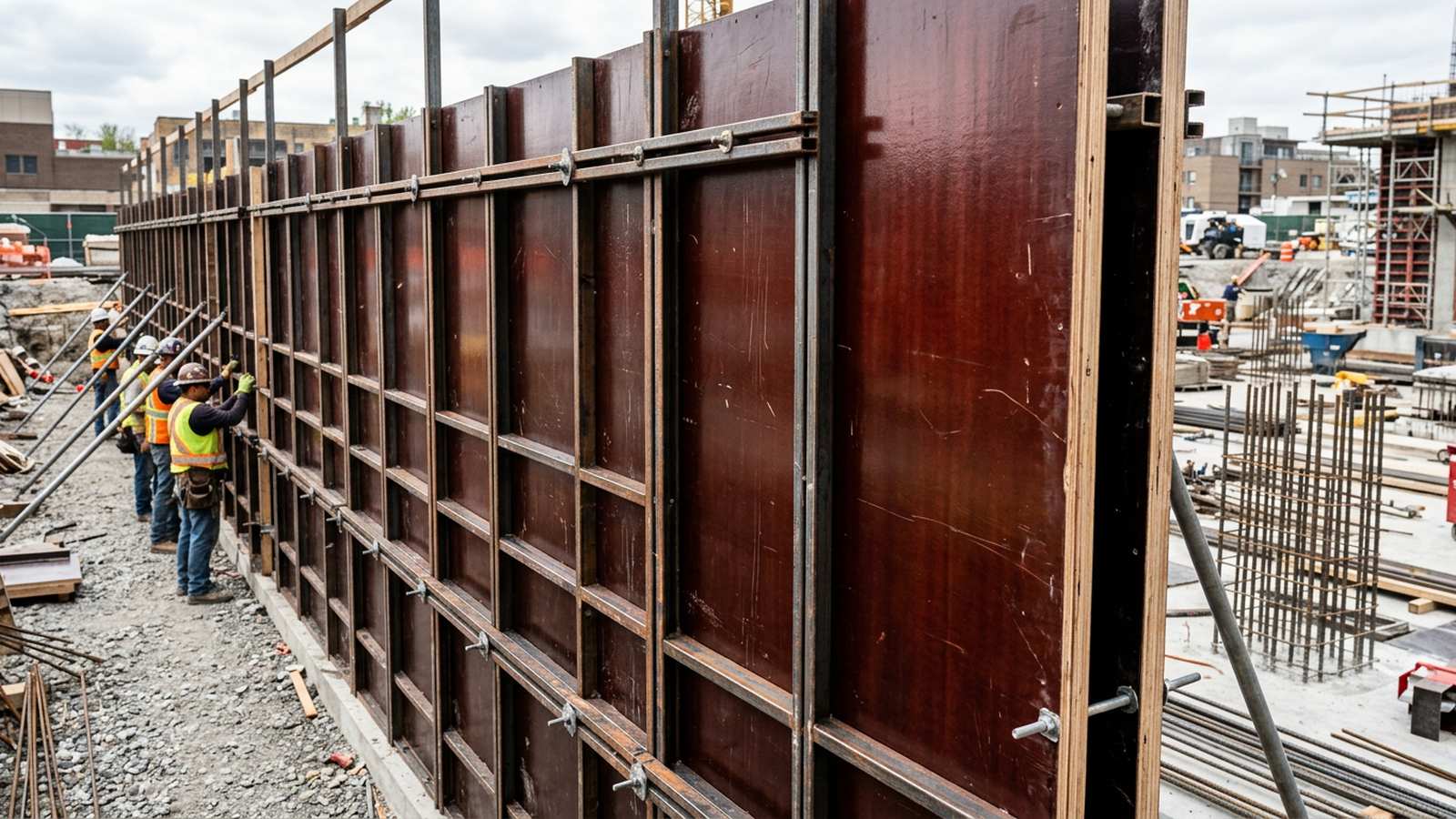
In concrete construction, formwork determines the final surface quality and the pace of the job. Choosing the right plywood for the moulds is not a minor detail: it affects the concrete finish, the number of pours you can achieve and the cost per square metre over the project. Here are the key factors.
What film-faced formwork plywood is
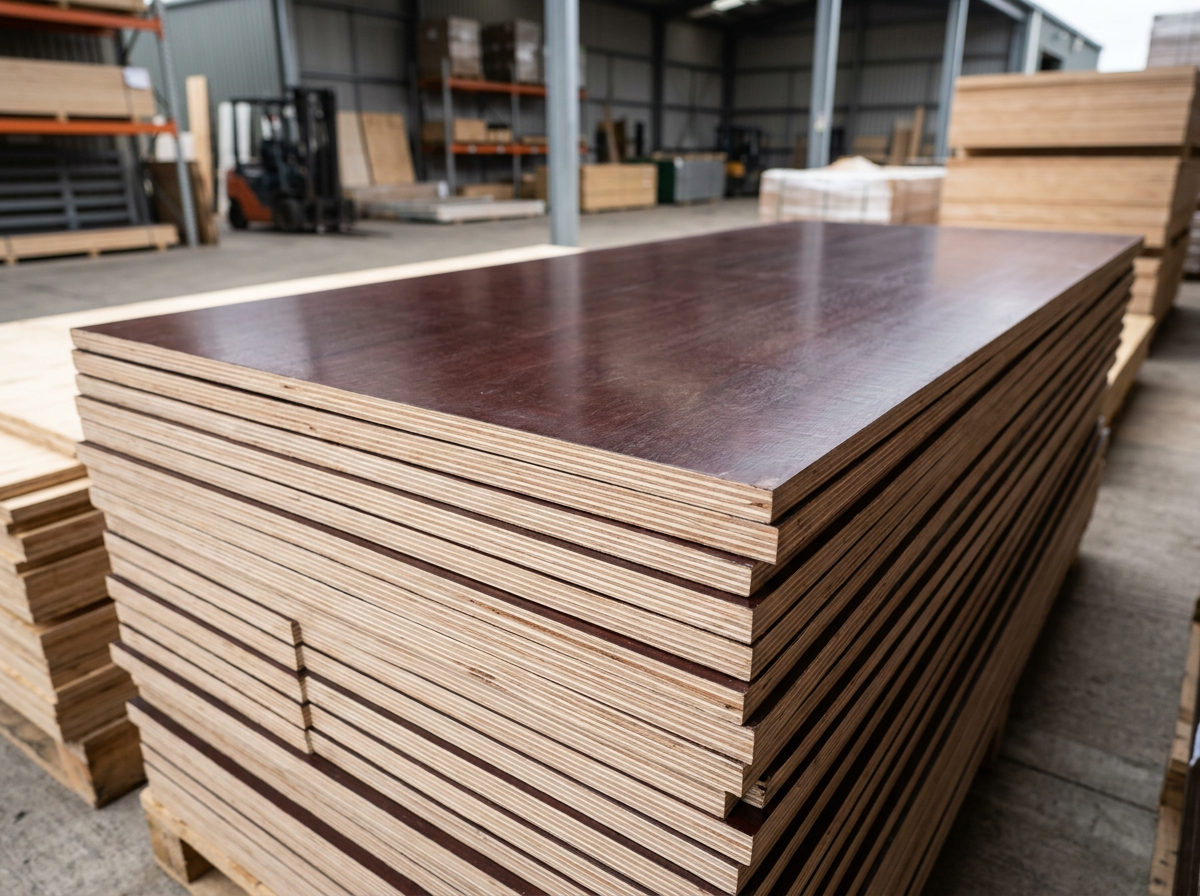
Formwork plywood —also called phenolic or film-faced board— is a panel of wood veneers (birch or combined) coated on both faces with a phenolic film. This waterproof coating protects the wood from the concrete's water, eases stripping and lets the panel be reused many times.
Most common thicknesses
Thickness is chosen according to the fresh concrete pressure and the spacing between supports:
- 12 mm: light applications, reinforcements and curves.
- 15 mm: low-load formwork and auxiliary work.
- 18 mm: the standard thickness, most used for walls, columns and slabs.
- 21 mm: large-surface formwork and wider support spacing.
The greater the thickness and number of plies, the higher the rigidity and the lower the deformation under concrete pressure.
Coating (film) types
The film weight determines how many times the panel can be reused:
- Light film (120 g/m²): fewer pours, suitable for one-off jobs.
- Standard film (120–220 g/m²): the most common, a good balance of cost and durability.
- High-weight film (over 220 g/m²): greater abrasion resistance and more pours, ideal for industrial formwork.
A smooth film gives an exposed-concrete finish; a mesh (anti-slip) film is used when safety matters more than finish.
Number of uses (pours)
The number of reuses depends on the film, maintenance and stripping:
- Standard panel: 8 to 20 pours.
- Well-maintained high-weight panel: up to 50 pours or more.
Best practices to maximise pours: apply a release agent, clean after each use, seal cut edges and store panels protected from moisture and sun.
How to choose the right panel
- Define the concrete pressure and support spacing → determines thickness.
- Estimate how many pours you need → determines film weight.
- Check the required finish (exposed or structural concrete).
- Always seal edges after cutting to prevent water ingress.
Conclusion
Choosing the right formwork plywood —thickness, film and maintenance— lowers the cost per pour and improves the concrete finish. Investing in a quality panel pays off with every reuse.
At KEFI Bosque Group we stock phenolic formwork plywood in various thicknesses and film weights, ready for delivery. Contact us at info@kefigroup.es or at kefigroup.es.
Contact
Get in touch and we'll reply with availability and prices:
- General enquiries: info@kefigroup.es
- Sales and orders: sales@kefigroup.es
- Technical support: support@kefigroup.es
Phone: +34 690 288 718 · +34 654 073 786
Web: kefigroup.es