
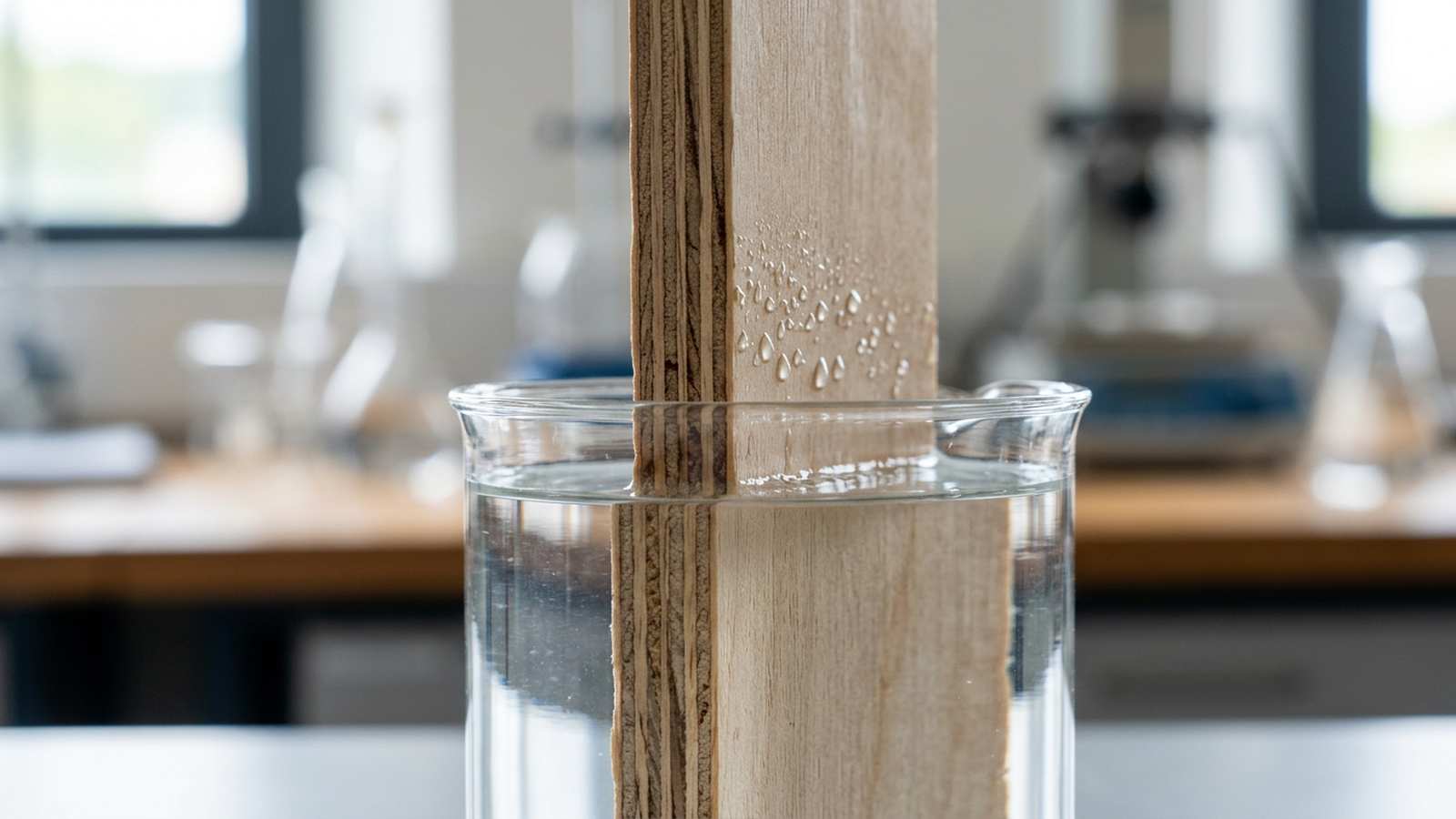
When choosing plywood for a project, one of the most important —and most misunderstood— questions is how much moisture it will withstand without delaminating. The answer lies in the bonding class, defined by the European standard EN 314. Understanding this classification prevents costly mistakes and ensures the panel performs in the conditions it's installed for.
What EN 314 measures
EN 314 evaluates the quality of the bond between plywood veneers —the strength of the glue line. It does not measure the mechanical strength of the wood itself, but the ability of the bonded joint to stay intact under different moisture and temperature conditions.
The standard has two parts: EN 314-1 (bond quality test methods) and EN 314-2 (requirements by use class).
The three bonding classes
- Class 1 — Interior (dry) use: for protected environments with low relative humidity. Typically uses urea-formaldehyde (UF) glue. Ideal for furniture, interior linings and uses with no water exposure.
- Class 2 — Humid conditions: for occasional or high humidity, but protected from direct weather. Uses improved glues (melamine-urea, MUF).
- Class 3 — Exterior use: for prolonged exposure to moisture and weather. Uses phenolic resins (WBP, "Weather and Boil Proof"), resistant to water, boiling and wet-dry cycles. This is the class required for truck bodies, formwork and exterior construction.
How the bond is tested
To verify the class, samples undergo different treatments:
- Water immersion for 24 hours (interior classes).
- Boiling in water and subsequent drying (Class 3 exterior).
- After treatment, the shear strength of the glue line is measured.
Only if the joint keeps a minimum strength after testing does the panel receive its classification.
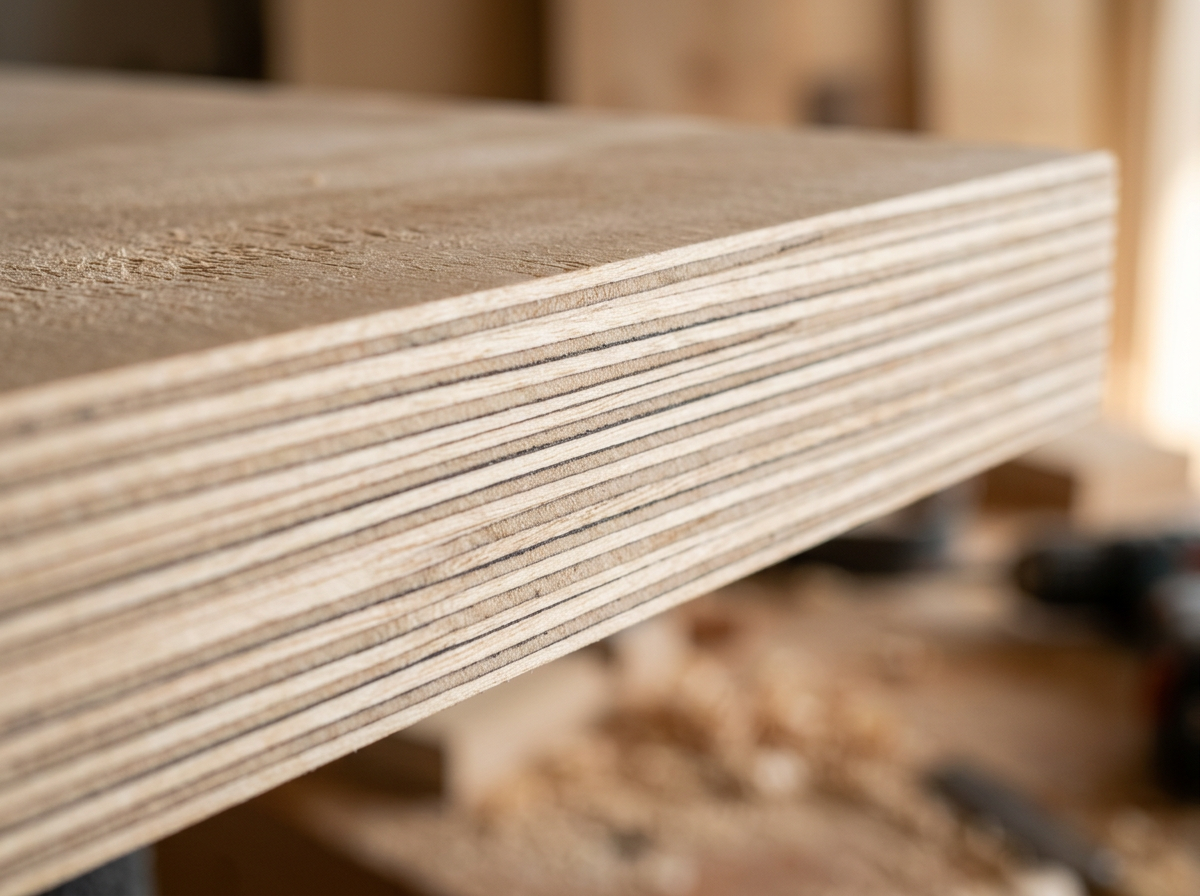
How to choose the right class
The rule is simple: choose the class based on real moisture exposure, not on price.
- Dry interior (furniture, shelving) → Class 1
- Protected humid areas (bathrooms, industrial kitchens) → Class 2
- Exterior, truck bodies, formwork, transport → Class 3 (phenolic WBP)
Installing a panel of a lower class than needed causes delamination, swelling and premature failure. Over-specifying the class, on the other hand, raises costs with no benefit.
Conclusion
The EN 314 bonding class is the decisive criterion for ensuring plywood durability against moisture. Knowing the three classes and choosing the right one for the end use protects the investment and prevents on-site failures.
At KEFI Bosque Group we offer birch plywood with Class 3 phenolic bonding, suitable for the most demanding conditions. Ask us about availability and specifications at info@kefigroup.es or at kefigroup.es.
Contact
Get in touch and we'll reply with availability and prices:
- General enquiries: info@kefigroup.es
- Sales and orders: sales@kefigroup.es
- Technical support: support@kefigroup.es
Phone: +34 690 288 718 · +34 654 073 786
Web: kefigroup.es